Paper embossing and creating products with tactile finishes: what you need to know
There are several ways to use embellishments to enhance your packaging, adding shine, texture or other three-dimensional effects. You can also combine different embellishments for a truly personalised, unique look.
What is paper embossing?
The die used in this process is a two-piece set of custom metal plates made to match the image or text to be raised. One part of the die has a raised surface following the design, while the other part is simply recessed.
The opposite effect can be achieved through the same process and is called debossing. It can be used to emulate engraving.
The die can have a single level or several, depending on the detail you want to raise, the complexity and the desired height of the design.
In some cases, 3D printing is also referred to as embossing or tactile printing. However, the two processes are substantially different.
Read also: Personalised items for employees: ideas and recommendations for promoting a brand.
Applying embossing effects in print
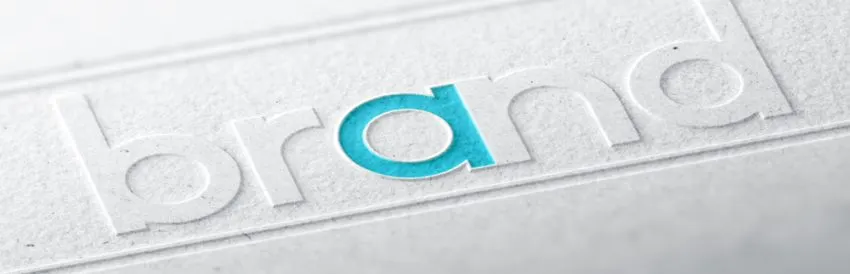
Blind embossing
As the name suggests, this raises the desired design without using ink. One way to make the finish stand out is to use textured paper, as the area around the design will be pressed flat, creating more contrast.
Combination embossing
This type of die combines several relief effects in a single process, allowing embossing and debossing on the same material.
Single-level embossing
This process uses a die that changes the paper surface on a single level. Because the die required for this type of relief is extremely simple, it is also the most affordable option for companies that want to produce items with unique tactile finishes.
Multi-level embossing
This embossing process uses a die with distinct levels to create a more sculptural impression or a more detailed texture that stands out.
Sculptured die
This type of die requires custom hand tooling to create levels and detail resembling a bas-relief sculpture. Because it requires experienced operators, usually working from a supplied image, it is a more expensive embossing method.
Find out which promotional materials you can use to promote your company's projects. You can apply embossing effects to these ideas too!
Textured die
To create this effect, a die with an engraved texture is made. It differs from multi-level embossing or a sculptured die in that there is a single die with added detail and simple patterns.
Rounded die
This type of die creates a rounded or domed effect. It is often used for logos and other typographic designs.
Glazing
Glazing refers to a raised area with a shiny or polished appearance. Most often, it is achieved by applying heat under pressure to create a glossy impression on the design.
Why choose paper embossing?
The texture and sculptural quality created by embossing can make the customer experience memorable. Including a raised area on your business cards or product packaging invites consumers to enjoy an interactive, tactile experience.
Also find out how to choose the right production printer for your company's needs.