Latex printing is one of the most innovative technologies in the printing industry, developed as a sustainable alternative to chemical-based inks such as solvents. So if you are looking for a printer that helps you minimise printing errors, get fast results and cut production costs, choose a printer with latex technology.
This guide will help you understand how it works and when to use this printing option, as well as some of the benefits of the latest latex printing technology.
What is LATEX printing technology and how does it work?
When we talk about latex printing, we are referring to a synthetic material.
Synthetic latex works in the same way as the natural resin originally found in the fluids of certain species of flowering plants and trees. This liquid has unique properties: it coagulates and solidifies on contact with air.
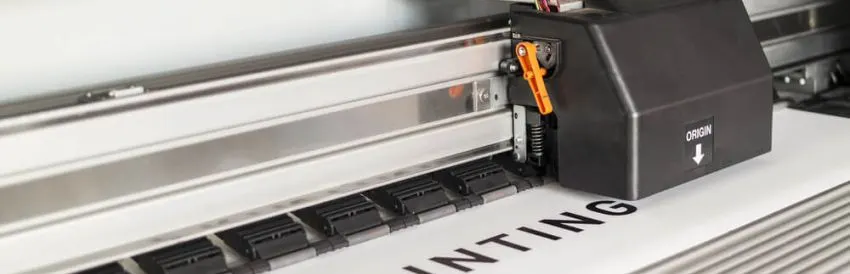
Latex printing technology uses print heads to apply water-based colours to a variety of media, such as canvas, vinyl and banners. The latex itself acts as a carrier for the colour pigments, while heat is applied immediately to shorten drying time.
As a result, the entire printing process from start to finish is much faster than with other methods, helping to deliver a superior result.
See also: Optimising and reducing printing costs for companies
Synthetic latex is also odourless, efficient and does not release potentially toxic or harmful solvents. However, the most distinctive feature of this material is its flexibility. Latex can stretch (to a certain extent) over any material, making it a preferred option for textile and vinyl applications.
When and where can you use LATEX printing technology?
Latex printing technology can be used for a wide variety of projects:
For vinyl
One of the best uses for latex printing is on vinyl. Because self-adhesive vinyl can be a sensitive material, it needs careful handling. Latex printing can have less impact on this medium, ensuring a higher level of quality control.
The faster you can finish print jobs, the faster your business can fulfil orders and generate revenue.
This guide will help you understand how it works and when to use this printing option, as well as some of the benefits of the latest latex printing technology.
What is LATEX printing technology and how does it work?
When we talk about latex printing, we are referring to a synthetic material.
Synthetic latex works in the same way as the natural resin originally found in the fluids of certain species of flowering plants and trees. This liquid has unique properties: it coagulates and solidifies on contact with air.
Latex printing technology uses print heads to apply water-based colours to a variety of media, such as canvas, vinyl and banners. The latex itself acts as a carrier for the colour pigments, while heat is applied immediately to shorten drying time.
As a result, the entire printing process from start to finish is much faster than with other methods, helping to deliver a superior result.
See also: Optimising and reducing printing costs for companies
Synthetic latex is also odourless, efficient and does not release potentially toxic or harmful solvents. However, the most distinctive feature of this material is its flexibility. Latex can stretch (to a certain extent) over any material, making it a preferred option for textile and vinyl applications.
When and where can you use LATEX printing technology?
Latex printing technology can be used for a wide variety of projects:
- Banners;
- Backlit graphics;
- Textiles;
- Canvas;
- Signs;
- Flags;
- Doors;
- Murals;
- Stickers;
- Shopfronts and other commercial spaces;
- Packaging;
- Wallpaper;
- Window graphics.
For vinyl
One of the best uses for latex printing is on vinyl. Because self-adhesive vinyl can be a sensitive material, it needs careful handling. Latex printing can have less impact on this medium, ensuring a higher level of quality control.
For textiles and interior décor
Latex inks can easily be used for wall designs and fabrics, thanks to the inherent flexibility of latex compounds.
In hospitals, clinics and educational settings
Unlike solvent-based inks (which contain compounds harmful to people and the environment), latex ink is made up of 70% water, which makes it ideal for indoor environments and especially suitable for spaces used by vulnerable people.
For these reasons, latex printing technology is often the choice for hospitals, clinics and educational settings.Latex inks can easily be used for wall designs and fabrics, thanks to the inherent flexibility of latex compounds.
In hospitals, clinics and educational settings
Unlike solvent-based inks (which contain compounds harmful to people and the environment), latex ink is made up of 70% water, which makes it ideal for indoor environments and especially suitable for spaces used by vulnerable people.
Combined with lamination
Lamination is used to provide extra protection, enhance colours or simply extend the life of the finished product in outdoor or abrasive environments.
Using latex printing together with lamination brings several benefits:
Lamination is used to provide extra protection, enhance colours or simply extend the life of the finished product in outdoor or abrasive environments.
- It protects graphics from the effects of urban or industrial pollution;
- It adds resistance to abrasion, scratching and rough handling;
- It makes cleaning easier, as chemicals do not affect the printed material.
The benefits of LATEX printing technology
High image quality
The quality of latex printing far exceeds what most other printing options can achieve. The printers also have automatic maintenance and calibration features that ensure consistent quality in every print.
High-speed printing
Latex printers can deliver more prints in less time. Printed materials are ready for lamination or sale almost immediately, because latex ink dries almost instantly.
The faster you can finish print jobs, the faster your business can fulfil orders and generate revenue.
Durable prints
Latex prints are so durable that they can last up to three years without lamination.
Latex prints are long-lasting whether the printed material is used outdoors or indoors, because latex ink is resistant to fading and scratching.Safe products
Because latex ink does not penetrate beyond the print surface, printed materials can be recycled after use. Another eco-friendly feature of latex printers is that the ink does not release hazardous volatile organic compounds that are harmful to people and the environment.
Latex printing technology has come a long way very quickly. Initially seen as a successor to solvent-based printing, it soon took its place alongside UV printing technologies as one of the most important options for large-format printing.
Read also: UV printing: what it is and how it works
Its ability to produce fast runs without chemicals has established it as a sustainable choice and a preferred option for indoor settings in healthcare, education and restaurants.Because latex ink does not penetrate beyond the print surface, printed materials can be recycled after use. Another eco-friendly feature of latex printers is that the ink does not release hazardous volatile organic compounds that are harmful to people and the environment.
Latex printing technology has come a long way very quickly. Initially seen as a successor to solvent-based printing, it soon took its place alongside UV printing technologies as one of the most important options for large-format printing.
Read also: UV printing: what it is and how it works