This article looks at sustainability in the print and packaging industry – what the sector looks like today and how businesses can make their printing processes more sustainable.
What does sustainability mean in the print and packaging industry?
Today, the concept of "sustainability" has many facets. Whether it concerns resource and energy consumption, reducing the ecological footprint or economic decisions, sustainability is concerned with all of these equally.
In the print and packaging industry, the focus is on using durable and biodegradable materials, adopting innovative printing and packaging processes, and implementing artificial intelligence for optimal control and greater efficiency.
Sustainability therefore inevitably goes hand in hand with digitalisation for businesses in this sector.
Industry 4.0 is the key to sustainable global production in the print and packaging industry.
Changing consumer and information habits are also raising sustainability requirements in this industry. Companies that want to keep pace with their customers' needs and wishes will therefore have to look for and implement the most sustainable solutions possible, in good time.
Here are some of the most notable recent innovations in the print and packaging industry adopted by ROEL in Romania:
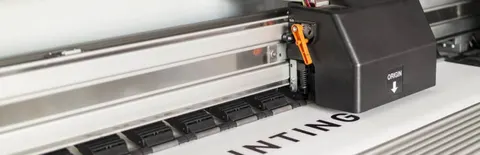
UV printers, such as the Ricoh Pro T7210, differ considerably from more traditional equipment because they use an innovative drying method called "UV curing". This technology uses ultraviolet light to dry the ink almost instantly – a fraction of the time needed by printers that use heat for the same purpose.
Not only does this type of printing help reduce turnaround times, it also saves ink.
A UV flatbed printer uses around 20% less ink than conventional printers.
Despite its very large size, UV technology also uses less energy than traditional methods. With instant on/off functions, these printers also minimise standby consumption between cycles, reducing carbon dioxide emissions.
Using UV flatbed printers therefore makes a strong statement for both sustainability and efficiency goals.
Find out more in UV printing: what is it and how does a UV printer work?
Digital printing
This printing method does not rely on the traditional plates used in offset printing. Instead, digital images are printed directly onto a variety of substrates. This equipment can read digital files, such as .pdf documents, and print them on substrates such as canvas, fabric, cardboard and paper.
The efficiency of digital printing contributes to sustainability. The equipment produces lower carbon dioxide emissions than conventional printing presses.
Digital printing also produces less waste, because no printing plates are needed. Plates wear out over time with use and have to be replaced, adding to the waste generated by inks.
Sustainable printing inks
Besides streamlining processes and using sustainable print materials, companies in this industry can also take advantage of greener inks for sustainable printing.
Around 4 billion kilograms of ink are used in printing every year worldwide. This contains around 800 million kilograms of petroleum-based pigment.
Eco-friendly inks limit the use of petroleum and are made largely from alternative raw materials.
A very good example of this is wide-format latex printing. The Ricoh Pro L4130/Pro L4160 printers are built on state-of-the-art technology that uses durable, eco-friendly latex inks.
Ricoh's wide-format latex printers have achieved Greenguard Gold Certification in recognition of their low chemical emissions and contribution to better air quality. This also means the equipment can be used safely in educational and healthcare settings.
Sustainable packaging
Packaging is the great weak spot in environmental protection. Microplastics, metals and other plastics pollute forests and oceans and drive species to extinction. On top of this comes the often poor ecological footprint caused by extracting raw materials and the subsequent processing of oil, aluminium and other heavy metals.
Does this mean we will see the end of the packaging industry?
Of course not. Modern, efficient packaging protects perishable and sensitive goods against contamination and damage, which makes it important for reducing product waste.
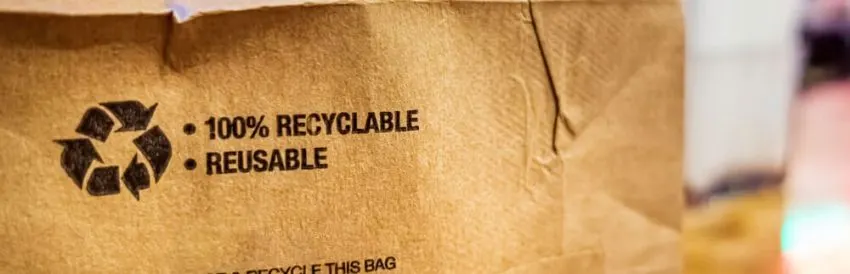
By developing eco-friendly, recyclable and reusable packaging, raw materials can also be returned to the usage cycle, helping to reduce the volume of waste worldwide.
Find out also how you can optimise and reduce printing costs in your company.
With Ricoh UV flatbed and wide-format latex printers, companies can now print sustainable packaging and support the environment.
It is important for the print industry to take responsibility and make greater efforts to reduce its impact on the planet. That is exactly why ROEL consistently focuses on bringing equipment that supports waste reduction and efficiency to the Romanian market.