Used to produce indoor and outdoor advertising materials, UV printing is one of the innovative technologies that can help a business grow and thrive. Highly valued for the quality of its results and its ability to reproduce digital designs on a wide range of materials, this printing method offers a simple, fast workflow at competitive costs. Here's how a UV printer works and why it is considered one of the best pieces of production equipment.
What is a UV printer?
A UV printer is a device that uses inkjet technology to produce images on a variety of materials of different thicknesses. It can print on plastic, glass, wood, metal, ceramics, canvas, acrylic, PVC, photo paper, leather and textiles. Unlike other types of printer that use water-based or solvent ink, a UV printer uses UV-curable ink made from acrylic monomers.
Industrial printing with ultraviolet-based equipment is similar to screen printing, only much more economical. UV printing is environmentally friendly because it produces few volatile organic compounds and little waste, heat or odour, so UV printers can also be used in places such as healthcare and educational facilities.
How does a UV printer work?
If you run a digital print business, want to raise your brand's profile with personalised items for employees or branded promotional materials, or are planning other projects, you will certainly need high-quality, durable prints. The good news is that a UV printer works in a relatively simple way and is very easy for anyone to use.
First, the images to be printed are prepared on a computer using specialist design software. Once these details are set and the material chosen, the image is printed directly onto its surface using an inkjet. The printer then emits a beam of UV light that dries the ink immediately. As the device lays the ink down on the substrate, the ultraviolet lamp cures it, so there is no risk of it running on the printed material.
UV printing solutions deliver outstanding quality and vivid, intense colours for personalised products that retain their properties over time and offer greater resistance to scratches, fading and water. Because it dries the ink instantly, a UV printer can achieve finer detail, even on difficult surfaces such as glossy or uneven ones.
What are the advantages of a UV printer?
Many companies that want to create promotional materials choose this modern solution because of the many benefits of UV printing. Here are the main advantages of a device that uses this technology:
Outstanding performance
A UV printer produces high-quality images while running at high print speeds. The processes involved deliver exceptional results, and the printed products are ideal for any type of space, indoors or outdoors.
Thanks to the fast drying process, the ink sets instantly on the surface, making the print durable over the long term. This is very important, especially for outdoor media exposed to moisture, bad weather and sunlight.
Vibrant colours
Unlike conventional equipment, a UV printer can produce a variety of colour combinations and multicolour prints, with vibrant, strong shades, without compromising the resolution, quality or intensity of the print.
UV printing on a variety of surfaces
One of the great advantages of a UV printer is that it can print on a wide range of materials, both flexible and rigid. The potential applications are practically unlimited, which is why this equipment is used in so many fields.
Eco-friendly
UV printers use eco-friendly, odourless and non-polluting substances, and the ink bonds permanently to the substrate.
Easy maintenance
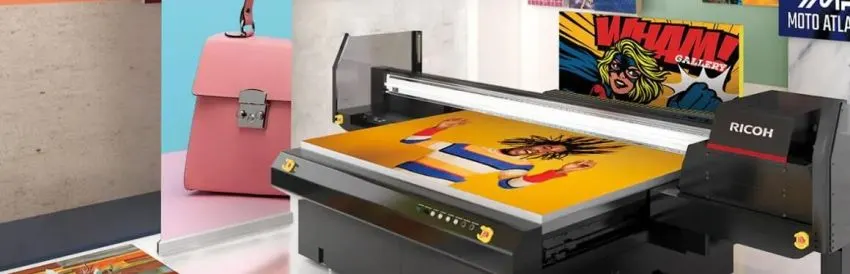
As well as being a cost-effective solution, a UV printer is simple to use and maintain. On our website you'll find extremely versatile and reliable Ricoh devices that you can use to create all kinds of promotional and personalised products. Whether you choose the PRO TF6251 UV Flatbed, which also includes Roll to Roll capabilities, or the Ricoh Pro T7210 UV Flatbed printer, optimised for the industrial decoration sector, maintenance is the same: regular cleaning of the device, checking consumables, proper storage and correct use
.
What are UV printers used for?
UV printers are generally used mainly for commercial applications, and some of the best products are Ricoh models. These printers deliver high graphic quality and very durable images. Versatile and reliable, UV devices have many uses, for example:
What is a UV printer?
A UV printer is a device that uses inkjet technology to produce images on a variety of materials of different thicknesses. It can print on plastic, glass, wood, metal, ceramics, canvas, acrylic, PVC, photo paper, leather and textiles. Unlike other types of printer that use water-based or solvent ink, a UV printer uses UV-curable ink made from acrylic monomers.
Industrial printing with ultraviolet-based equipment is similar to screen printing, only much more economical. UV printing is environmentally friendly because it produces few volatile organic compounds and little waste, heat or odour, so UV printers can also be used in places such as healthcare and educational facilities.
How does a UV printer work?
If you run a digital print business, want to raise your brand's profile with personalised items for employees or branded promotional materials, or are planning other projects, you will certainly need high-quality, durable prints. The good news is that a UV printer works in a relatively simple way and is very easy for anyone to use.
First, the images to be printed are prepared on a computer using specialist design software. Once these details are set and the material chosen, the image is printed directly onto its surface using an inkjet. The printer then emits a beam of UV light that dries the ink immediately. As the device lays the ink down on the substrate, the ultraviolet lamp cures it, so there is no risk of it running on the printed material.
UV printing solutions deliver outstanding quality and vivid, intense colours for personalised products that retain their properties over time and offer greater resistance to scratches, fading and water. Because it dries the ink instantly, a UV printer can achieve finer detail, even on difficult surfaces such as glossy or uneven ones.
What are the advantages of a UV printer?
Many companies that want to create promotional materials choose this modern solution because of the many benefits of UV printing. Here are the main advantages of a device that uses this technology:
Outstanding performance
A UV printer produces high-quality images while running at high print speeds. The processes involved deliver exceptional results, and the printed products are ideal for any type of space, indoors or outdoors.
Thanks to the fast drying process, the ink sets instantly on the surface, making the print durable over the long term. This is very important, especially for outdoor media exposed to moisture, bad weather and sunlight.
Vibrant colours
Unlike conventional equipment, a UV printer can produce a variety of colour combinations and multicolour prints, with vibrant, strong shades, without compromising the resolution, quality or intensity of the print.
UV printing on a variety of surfaces
One of the great advantages of a UV printer is that it can print on a wide range of materials, both flexible and rigid. The potential applications are practically unlimited, which is why this equipment is used in so many fields.
Eco-friendly
UV printers use eco-friendly, odourless and non-polluting substances, and the ink bonds permanently to the substrate.
Easy maintenance
As well as being a cost-effective solution, a UV printer is simple to use and maintain. On our website you'll find extremely versatile and reliable Ricoh devices that you can use to create all kinds of promotional and personalised products. Whether you choose the PRO TF6251 UV Flatbed, which also includes Roll to Roll capabilities, or the Ricoh Pro T7210 UV Flatbed printer, optimised for the industrial decoration sector, maintenance is the same: regular cleaning of the device, checking consumables, proper storage and correct use
.
What are UV printers used for?
UV printers are generally used mainly for commercial applications, and some of the best products are Ricoh models. These printers deliver high graphic quality and very durable images. Versatile and reliable, UV devices have many uses, for example:
- printing promotional materials;
- personalising products in the packaging industry;
- printing photos and information on plastic cards;
- decorating textiles and leather goods;
- printing canvas items and carpets;
- vehicle lettering and graphics;
- printing decorative images for the interior design industry;
- personalising hard materials – wood, tiles, ceramics, glass, etc.;
- decorating stickers, corrugated paper and corrugated cardboard;