

Even though the move towards digitising the documents everyone needs, whether for work or personal use, is well under way, printers are finding more and more everyday uses. As with the other technology we use to make our lives more comfortable, choosing the right printer matters, and it needs to suit the way you or your organisation work.
Printers have not changed much in recent years, but they have become more efficient and less expensive. You will still have to choose between laser and inkjet printers, standard and multifunction printers, and colour or black-only models. Given the wide range of options, we have put together a short guide to help you choose the perfect printer for your needs.
1. Based on how you will use it
It is essential to choose a printer that meets your requirements and usage needs. For example:
- If you need a printer for documents at home, you can look out for certain special features. A printer that operates quietly is ideal for keeping noise to a minimum, since the device will be used by the whole family. Another important feature is multifunction capability, which helps you handle family photos, medical and travel documents and so on, although a standard printer can also do the job;
- As people adapted to working from home to protect their health during the COVID-19 pandemic, demand grew for printers that support office work. In most cases, the ideal printer should offer high print speed and high print capacity;
2. Based on budget and costs
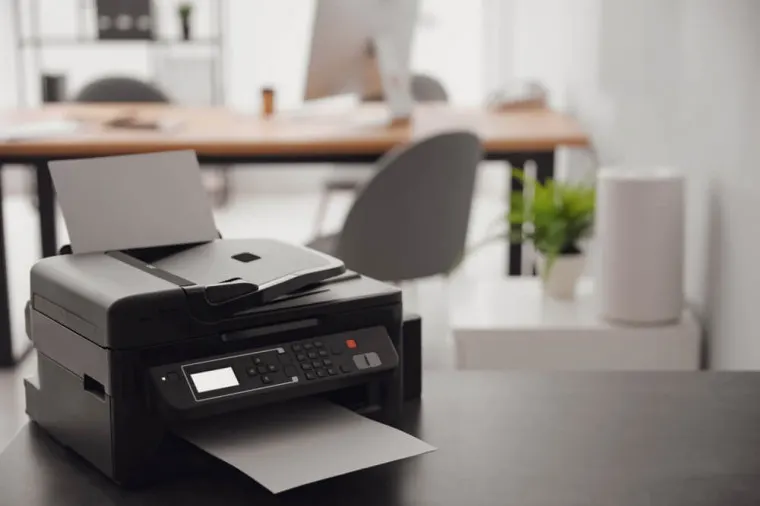
One of the reasons you want to buy a printer may be the trips and money spent on printing documents at a copy shop. But when choosing a printer, you need to consider both the purchase price and the running costs over its entire lifetime. Here is what the initial investment and other costs involve:
- The purchase price of the printer;
- Ink or toner costs;
- Energy consumption, depending on how often you use the printer and how many documents you print or scan;
- Servicing and maintenance in case of damage or malfunctions.
Cutting back on the initial investment in a printer can end up costing you more over time, especially if you have not considered how many documents you print and how often, and end up using a low-capacity device for large projects. Make sure you choose a powerful printer that can handle your own or your company's needs. Also try to understand the differences between a standard printer and a multifunction printer, and which one you think will save you more in the long run.
You can quickly find ways to reduce ink and toner costs, depending on the equipment supplier you choose. Choosing an energy-efficient printer will also make every use less costly.
3. Based on the printer's special features
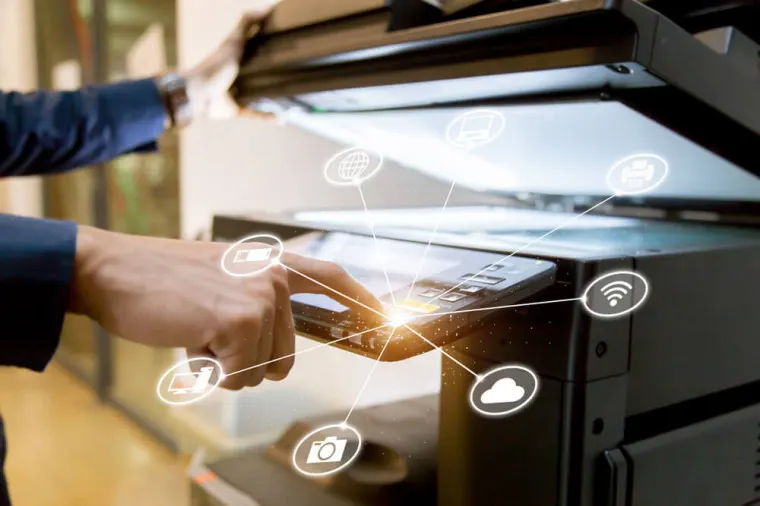
If you are thinking of investing in a printer, it is important to consider whether or not it has special features. Since this is not an investment you make every day, think about the extra functionality a printer can bring to your home or company:
- Connectivity and compatibility. If you want extra convenience when using your devices, make sure the printer can connect via Bluetooth, NFC and/or Wi-Fi and is compatible with your devices' operating systems (monitors, computers, laptops and even phones). If you have a Mac or any other iOS device, make sure the printer is compatible with that operating system – the same applies to Windows, Android, Linux, etc. Some printers even offer NFC, which is important if you want to manage the printer from your phone. Before you buy, you can check the manufacturer's website to see whether it meets your connectivity and compatibility requirements.
- Touchscreen. Just like phones, printers have adopted touchscreen operation. Traditional printers with buttons were fairly awkward to use (considering how technology and convenience have evolved), because you had to press a combination of buttons to navigate to a particular feature and back to the main menu. Touchscreen printers make this process simpler and more efficient.
- Duplex printing. Although the ability to print on both sides of a page is common today, not all printers include it yet – especially cheaper ones. Duplex printing is very useful, particularly if you regularly print large projects and want to save on paper costs.
As you can see, there is a wide range of criteria for choosing the ideal printer for your needs. If you run a production business, it is essential to opt for industrial printers, because ordinary ones will not cope with your workload.