Printed books remain the first choice for book lovers, despite the popularity of e-books. When Johannes Gutenberg introduced Europe's first movable-type printing system in 1450, he created the most important invention of the second millennium. As technology evolved, the book-making process continued to develop. Today, printing is easier than our ancestors could ever have dreamed. Discover the steps involved in making a book and the services and equipment needed for production.
Writing the book and approving the manuscript
The process begins with outlining the book, writing a first draft and then rewriting it. Most authors set the manuscript aside for a while, then return to it with "fresh eyes" to rewrite it. When the writer considers the manuscript finished, they send it to the publisher. There, the book is read carefully, proofread, edited, revised and finally approved.
Deciding on the design details
The next step in making a book is choosing the design elements. These include, but are not limited to, page size, font and type size, the paper used for the text and the cover, any visual elements or illustrations in the text, and the cover art. These elements are chosen by the art director together with the editor.
The final form of the book is determined by editorial standards, the target audience and the genre. As a rule, printers do not try to save money on book quality. To keep costs down, they opt for print management solutions that let them monitor their energy, paper and consumables usage so they can optimise performance.
Printing the book
In the past, printing books was a complex process. Letters were picked and set by hand, one by one, identified by touch and by their mirror image. Naturally, typesetters needed great dexterity for the job. Today the process is much simpler. Here are the steps involved in printing a book:
Printing
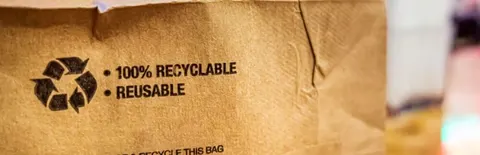
The book printing process starts with choosing the type of paper and the right dimensions. While sizes are standard, paper sheets can have different characteristics. Weight, bulk, thickness, roughness and opacity are the most important aspects to consider. Most books need ordinary paper, known as bond paper. Recycled paper, an eco-friendly option, has recently become popular too. For encyclopaedias, gloss paper is generally chosen, as it is needed for printing high-quality photos.
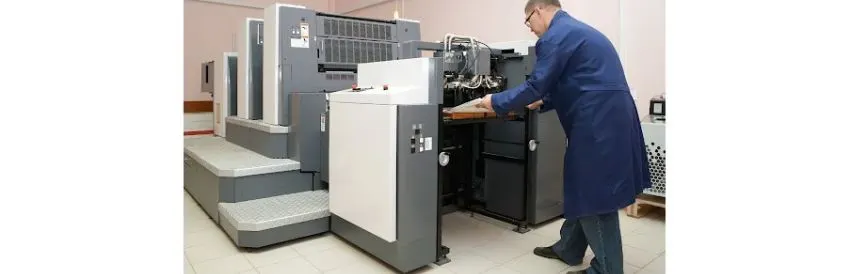
Most print shops use toner production printers. This type of printer is also efficient for colour pages, as it delivers exceptional image quality. Modern models offer many advanced features, remote operation, high print capacity and a compact design. They also include finishing options, so you don't need to buy separate equipment.
Inkjet production printers are also an efficient solution for printing books. They handle complex requirements and can print in both greyscale and colour. They also use high-quality pigment inks, support a wide variety of media and deliver outstanding results every time.
Binding
The next step is folding the pages, although many printing machines do this automatically. Then comes binding, where there are two options: sewing or gluing. Although sewn bindings used to last longer, perfect binding (with glue) is now more popular.
Binding machines are equipped with extremely precise systems, suitable for short, medium or long runs. They are easy to use and can automatically measure the thickness of the book to save time.
Finishing
Finishing completes the book printing process and covers any operation carried out at the end. This includes three-side trimming (cutting to size), gluing, die-cutting, blind embossing, cover decoration and more.
From a simple idea to the finished product, books go through the processes explained above. We hope you found this article useful and now have a better understanding of the services and equipment needed for production.